Deep Rest vs. Sleep: Embracing True Restoration
Deep Rest vs. Sleep: Embracing True Restoration
In our fast-paced world, sleep can often feel inadequate for replenishing not just our bodies but also our tired souls. We hustle, we work, we care for others, all the while pushing our own needs to the side. To many of us, sleep is the end-of-day reset button, but is it enough? The warm embrace of a peaceful night might not equate to the profound restoration that deep rest can bring. Let's explore this differentiating factor and how you can cultivate true restoration in your life.
A Personal Journey: The Awakening to True Restoration
A few months ago, I found myself tossing and turning at night, wrestling with thoughts and feelings that seemed to swirl endlessly in my mind. I had a comfortable bed, a quiet room, and the promise of sleep—but each night I awoke feeling just as drained as I did before lying down.
One particularly overwhelming week, I felt the familiar pangs of anxiety creeping in as deadlines loomed and personal matters tugged at my heart. It was during this time that a dear friend invited me into an experimental practice of deep rest through restorative yoga and guided meditation. Initially, I was skeptical. How could lying still for a while help when it felt so much easier to just hit the pillow?
Reluctantly, I agreed to try it out, and it was during that session, enveloped in soft blankets and gentle guidance, that I felt something shift within me. That was my first real taste of what deep rest meant—a refuge where my body and spirit could truly unwind.
Understanding the Difference: Deep Rest vs. Sleep
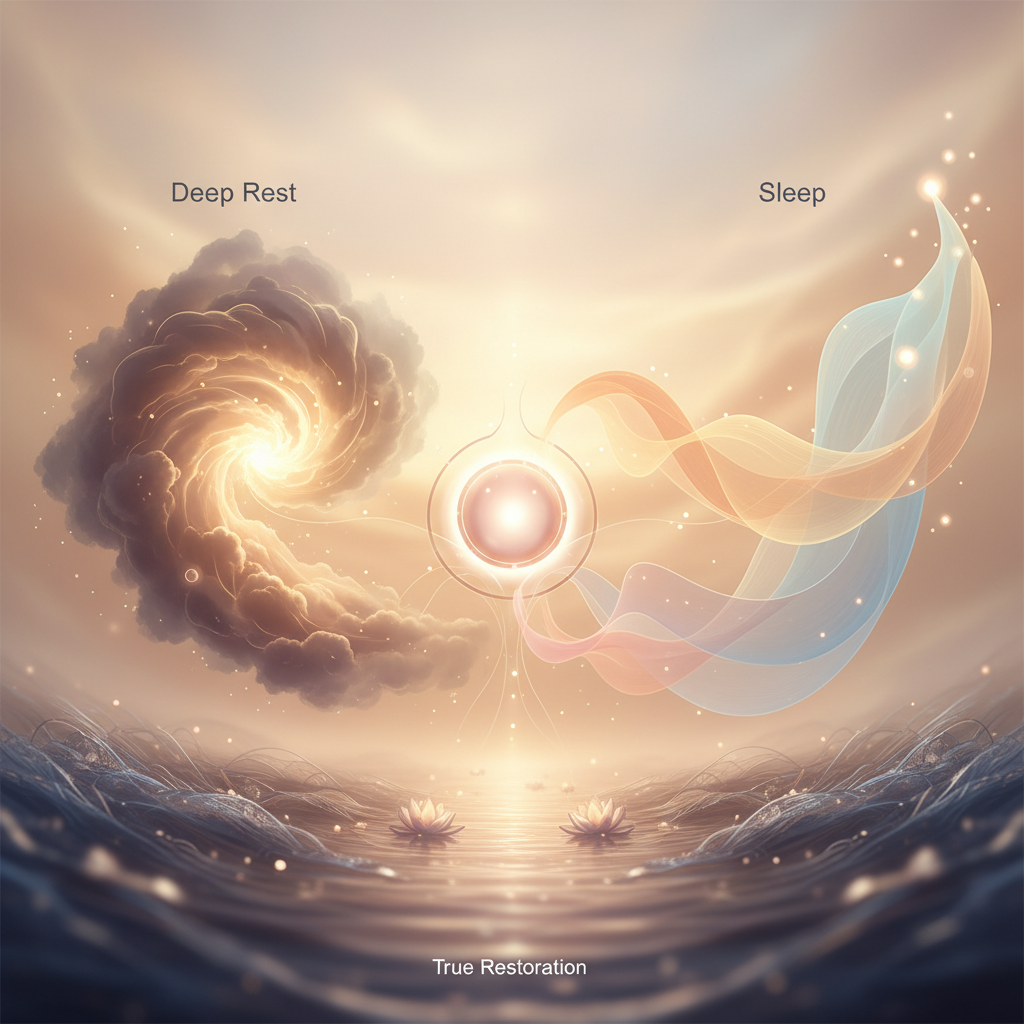
Sleep and deep rest are not mutually exclusive, but they serve different purposes in our holistic wellbeing. Here’s what sets them apart:
- •
Sleep is a natural state where our consciousness and awareness diminish and our body conducts various restorative functions. Yet, many of us experience fragmented sleep, affected by stress, routines, and distractions.
- •
Deep Rest, on the other hand, is a conscious practice that invites a profound relaxation state, allowing not just the body but the mind and soul to return to a baseline of peace and restoration. It's about surrendering to stillness and reconnecting with ourselves amid chaos.
Understanding this distinction opened my eyes to the possibility that true restoration could come not only from the hours I spent asleep but from intentional practices during the day—moments where I allowed myself to let go.
Embracing the Benefits of Deep Rest
As I began to immerse myself in deep rest practices, I started noticing remarkable changes. Here are a few insights and teachings I gathered along the way:
- •
Listening to Your Body: Just like a phone that needs to recharge, listen to the cues your body gives you. When fatigue sweeps over you, allow it to guide you into moments of rest, whether short naps or mindful pauses.
- •
Creating a Safe Space: Much like the cozy sanctuary you would create for a good night’s sleep, carve out a peaceful corner in your home. Use soft lighting, calming scents, and comfortable seating to brew an environment conducive to deep rest practices.
- •
Practice Mindful Breathing: One of the simplest yet most effective ways to invite deep rest is through breathing exercises. Silently count your breaths, gently elongating the exhalation. Feel the tension melt away with each breath.
- •
Integrate Short Rest Breaks: Even amidst hectic days, carve out short periods dedicated to deep rest, perhaps during lunch or right before a meeting. Stand, stretch, or find a quiet spot to meditate for just five minutes.
- •
Connect with Nature: Nature has an incredible capacity to restore. Spend time outside, whether it's a brisk walk or simply sitting in a park. Let the rhythm of the natural world soothe your restless spirit.
Practical Exercises to Begin Your Journey
Here’s a couple of exercises to get you started:
- •Guided Visualization: Spend a few minutes in a quiet space and close your eyes. Visualize a peaceful scene—maybe a tranquil beach or a serene forest. Immerse yourself in that moment, listening and feeling the sensory details.
- •Body Scan Meditation: Lay down comfortably and begin at the tips of your toes, slowly moving your attention upward. Notice any tension, release it with your breath, and create a sense of lightness throughout your body.
Finding Hope in Stillness
In a world that demands so much from us, embracing deep rest is a courageous act of self-care. By understanding its significance and integrating restorative practices into our lives, we allow ourselves to heal. It is a gentle reminder that amidst our busy lives, we can claim the peace that resides within.
As I reflect on my journey with deep rest, I find myself filled with hope and gratitude. While sleep still holds its place, the solace of true restoration has become a cherished priority in my life. My spirit awakens not just from sleep, but from a deep, nurturing presence that embraces me.
May you cultivate your own profound experiences of deep rest and allow healing to envelop your being, just as it did for me.
Key Takeaways
- •Deep rest is a conscious practice that allows profound relaxation and restoration.
- •Listen to your body’s cues and prioritize moments of rest.
- •Create a soothing environment that promotes deep relaxation.
- •Engage in daily practices of mindful breathing and visualizations.
- •Connect with nature to rejuvenate your spirit.
Allow yourself to rest deeply, embrace the stillness, and watch as healing flows into your life, inviting calmness and clarity every day.
Remember, you deserve it.